



Fundamentals of Trauma Recovery, Part 6

By: Chava Lederer

In building muscle, you will literally build your container to bear it all. When your container is fortified, recovery will be easier.

Read More

Adult ADHD

By: Aviva Zahavi-Asa

Success for adults with ADHD often stems from identifying and building on their strengths, while not over-focusing on their weaknesses. Discovering one particular talent or specialized area of accomplishment is critical for adults (and children) with ADHD. The earlier in life that individuals with ADHD identify their strengths, the greater the likelihood that they will succeed as adults in their chosen academic or occupational fields of interest.

Read More

Beginnings & Endings: Making Sense of Life Changes

By: Keren Burgman

The holiday season has ended, the parties and festivities subsided, and we come back to…

Read More

Who's Afraid of Retirement?

By: Rachel Kaminetsky

Navigating retirement is not only about filling your time or learning new skills. There is value in looking back, at what was, in addition to what’s next. There are relationships with others that will be impacted by retirement, and more than that; there is also the relationship with yourself.

Read More

Beyond Anorexia, Bulimia and Binge Eating Disorder: Understanding The Spectrum of Disordered Eating Behaviours

By: Hadassah (Johanna) Hazan


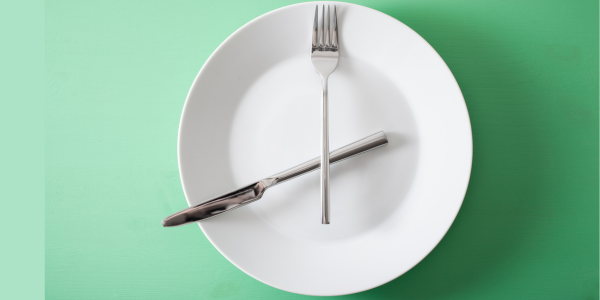
I feel frustrated when people dismiss lesser well-known disordered eating behaviours. My experience has led me to very confidently believe, that no one ends up in these sort of patterns, without there being something else going on, something that feels as if it requires some sort of distraction from, or total obliteration of. These things need healing. If they aren’t, they persist and the behaviours (coping mechanisms) developed to deal with them become harder to shift out of, thus limiting a person’s life ever more destructively. 


Read More

Seen, Heard, Felt: Why AI Falls Short in the Therapy Room

By: Yisroel Picker

Thinking of using an AI app for mental health? It might offer tips, but it can't replace a therapist. AI lacks intuition, can't read the room, and doesn't understand complex human nuance like a trained professional does. Learn why the human connection is still essential for navigating your mental well-being effectively.

Read More

Am I Depressed or Just Sad?

By: Jeni Danto

Growing up, I remember people saying, “I’m so depressed.” What made them so depressed? Various…

Read More

How to Emotionally Support Children During Challenging Times – Speaking to your children about recent rocket attacks in Israel

By: Sara Feinberg

Following the recent rocket attacks, many parents have asked me how best to respond to their children and help them manage their concerns and fears. Just as we have all heard the booms and seen the news reports, our children too are well aware of what is happening. As parents it is our job to support them through these difficult times. Here are some recommendations that can help.

Read More

Embracing Your Fear

By: Nancy Schwartz

Eight years ago when I was diagnosed with Lyme disease I had a deep-seated fear of never walking again; that I would never be able to take long aimless walks like the days before.

Read More

Grief for the Loss of our Parents

By: Jeanne S. Lankin

Those of us granted life have to face the loss of the most profound of all our relationships. The relationship a person has with a parent, affects every stage of our life. Therefore, losing a parent at each stage in life has unique challenges.

Read More

Back To School With ADHD

By: Linda Avitan

Advice to parents who face particular challenges around back-to-school among children with ADHD. Suggestions are offered in the context of common challenges such as difficulties with lack of routine, learning new habits and impulsivity. I invite parents to consult with me to examine ways to understand what's behind certain behaviors and build strategies, smoothing the way for better coping.

Read More

On Becoming a Personal Scientist: Living in the half-full glass

By: Ruth Shidlo

The half-full glass is the antidote to the half-empty one.

Read More

Chewbacca Visits: The Power of a Dream

By: Robin B. Zeiger

Dreams bring images and messages from the depths of our soul. It is our psyche’s way of compensating for our conscious life, which is only one-half of our life-story. Our dream life brings a richness and ebb and flow to our daily existence. Likewise when we are in touch with our unconscious, there is a flow to our daily existence much like the ebb and flow of the waves of the sea. Our unconscious helps bring us light and creativity and vitality.

Read More

What Makes Us Miss Relationship Red Flags?

By: Micki Lavin-Pell

Have you come out of a relationship recently where you feel like banging your head against a wall because yet again you’ve dated someone who turned out to be a bad apple? So you go into this mantra of telling yourself there must be no good people to date, because everyone you go out with ends badly.
Your dating pattern may look something like this. You meet someone, they make you feel really good in the beginning, they treat you nicely, take you to nice places and show you a good time. Then slowly they show less interest in you. Maybe they distance themselves from you, start saying things that are hurtful, or seem to care less about your opinion?

Read More

Dying at a Distance: Grief During Covid

By: Jeanne Lankin

Humans are incredibly resilient. I am constantly in awe of the people that I speak to, in my role as a bereavement therapist, who are creating amended rituals to help them cope with their painful losses. There is no correct answer to our predicament. It feels unfair to be deprived of the comfort of our traditions that help guide and heal mourners. However, we can try to creatively engage in meaningful adaptations of our rituals during this crisis to help us process our grief.

Read More

The Connection Between ADHD and Anxiety Disorders or Depression

By: Aviva Zahavi-Asa

Several theories exist to explain the higher incidence of anxiety disorders or depression among individuals with ADHD. One theory presumes that because the same neurobiological systems that control attention also control mood, it is reasonable to assume that the neurological causes of ADHD also cause anxiety disorders or depression. Another theory posits that anxiety disorders or depression are an outcome of living with ADHD, especially if attention difficulties have gone undiagnosed or untreated for many years, often leading to chronic feelings of failure, frustration, disappointment and being overwhelmed.

Read More

On Becoming a Personal Scientist: Beginnings

By: Ruth Shidlo

As the baby gains enough safety and security via his attachment systems with the significant people in his life, he is able to identify and then befriend the familiar within the strange.

Read More

Feeling Helpless? Here Are 3 Corona (or Anytime) Coping Skills

By: Daniel Fund

It can happen at any time or place. But especially now, with the impact of COVID-19 still being felt here in Israel even as things are finally opening up, it's an expected emotion to be feeling. Helplessness. And we are all in it together. Including your therapist. What can you do when you feel like this? Here are 3 powerful skills I know of.

Read More

Managing Custody During Corona

By: Linda Avitan

The Corona crisis is challenging and stressful on many levels. This is particularly true in families already challenged by divorce and managing custody. My blog addresses basic points of reference around children's needs and challenges around going back and forth between parents and advise to parents on how to best navigate. I offer some "do's and don'ts" for promoting successful communication as well as advise on juggling your life when the children are with you. I invite you to contact me for help, advise or even just venting! Everyone needs someone, now more than ever.

Read More