


Hope and Healing: From Warsaw to Jerusalem

By: Micki Lavin-Pell

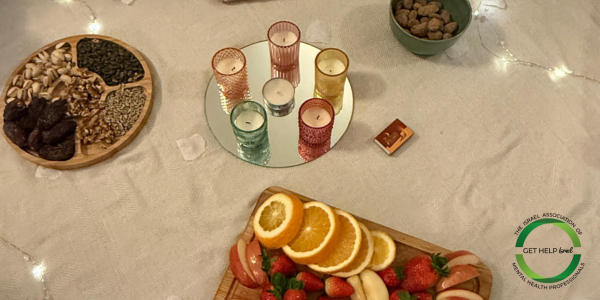
It was amazing how the strength of the comradery of the women enabled them to shift their view of themselves and their experience of MRKH from one in which they were hard done by and less of a woman, to feeling special. They were able to explore the possibilities that having MRKH presented to them. They also recognized the hope and possibilities that lay within their situation, on many levels. When the women started the workshop, many were nervous and fidgety. By the end, they were sitting up straight with big smiles on their faces and hope in their eyes.

What I learned was that we can all be hope experts, as we have all experienced life challenges. The more we recognize the challenges that we endured, remove the shame connected to those challenges and celebrate the accomplishments, the better able we can help others feel more hopeful too.

Read More

Healing the Inner Garden: A Journey of Creation, Connection, and Inner Peace

By: יוסף זאב בראווער

Explore a path to healing that unites therapeutic insights and Jewish wisdom. This article bridges Internal Family Systems, mindful awareness, and timeless spiritual teachings, offering readers a journey toward self-discovery, purpose, and inner peace.

Read More

On Becoming a Personal Scientist: Beginnings

By: Ruth Shidlo

As the baby gains enough safety and security via his attachment systems with the significant people in his life, he is able to identify and then befriend the familiar within the strange.

Read More

Cultivating Self-Care

By: Esther Avital Gottesman

In its most general sense, self-care is often equated with self-pampering. Given this notion, it can be seen as selfish. However, that idea is mistaken.

Read More

Fundamentals of Trauma Recovery (Part 1)

By: Chava Lederer

In trauma recovery, being mindful of your personal gauge will inform you what’s helpful, what is not, what soothes, what activates, what feels good, what is uncomfortable. Listening to your gauge is essential in deciding what’s the best for your recovery.

Read More

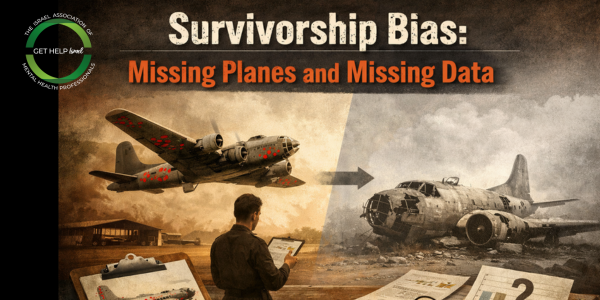
Survivorship Bias: Missing Planes and Missing Data

By: Yisroel Picker

Survivorship bias is like the WWII military only looking at bullet holes in planes that returned, while ignoring the ones that crashed. In the same way, we copy the 'hustle' of famous billionaires and think it’s a blueprint, forgetting the thousands of people who did the exact same thing and failed. If you only look at the survivors, you’re missing the full picture of the risks you’re actually taking. To truly survive, you have to stop obsessing over the winners and start looking at the planes that never made it home.

Read More

Get Grounded With Art

By: Yannah Popovitz

Creative expression can be a soothing and releasing form of self care and help us find our anchor.

Read More

The Hidden Layers: A Therapist's Guide to Understanding Trauma

By: Yisroel Picker

Just like an onion, trauma has many layers. What you see on the surface is rarely the full story, and true healing often begins when we start peeling back the "how," "who," "where," "when," and "why" behind the "what." This article explores the powerful onion metaphor in understanding trauma, revealing how a deeper look can lead to profound transformation. Discover why exploring every layer is essential for both clinicians and those on their healing journey.

Read More

How to Track Anxiety and Help Resolve It

By: Ruth Shidlo

We need our ‘signal’ anxiety, because otherwise, we’d be more vulnerable to danger.

Read More

Caring for the Caregiver

By: Jeanne S. Lankin

As a clinical social worker and therapist for over 30 years and having myself been a caregiver for over 10 years, I have observed that caregiver stress is the single most underreported source of stress for people ranging from 45 until their 80’s.  While caregiving can also be a source of blessing and provide the feeling that you are doing the “right thing” for your elderly loved ones, it is tinged with a multitude of other emotions.  To your friends and family, you may not want to openly express these emotions and feelings. A trained therapist, an expert in these matters, is needed.  

Read More

Valuable Tips to Manage Pain

By: Ruth Shidlo

Given what we know today, it appears likely that unresolved trauma, whether minor or major, plays a role in the persistence of chronic pain, through mechanisms of kindling (a self-perpetuating phenomenon of neural excitation) and priming (in which the brain readies itself to respond a certain way), that cause us to continually brace ourselves against the threat that caused the pain or the internal threat of pain itself. This is great news, because it means that to the extent that the trauma is worked through at the body/mind level, the pain should either disappear or lessen.

Read More

Earth, Water, Air, and Fire

By: Chava Lederer

The four classical elements are channels through which we make contact with the present moment reality, and engage our uniquely human mind – a mind capable of creativity, of connecting to others, of faith and spirituality.  I offer you these four elements as resources in moments of stress, panic, fear, or any other overwhelming experience.

Read More

Fundamentals of Trauma Recovery, Part 8/8

By: Chava Lederer

By tackling pieces of your recovery to tackle that are ever-so-small, you ensure your success; this will build greater self-confidence and foundations for each further success.

Read More

Understanding Group Therapy: Benefits, Core Principles, and Distinctions 

By: Malka Cohn

Therapists often discuss the need for their clients to have supplemental support and another avenue for self-growth and reflection. Group Therapy, also known as a Process Group is more than support. It is a social microcosm where personal struggles are discussed in the here-and-now. While sharing similar benefits as other group models,  it becomes a living family dynamic where members can support, challenge and model healthy interactions with guidance of the therapist group leader.

Read More

Finding Home Within

By: Naomi Zauderer

Moving to a new country can feel overwhelming, but settling in is about more than just checking off tasks—it’s about finding a sense of home within yourself. This post explores the emotional side of acclimating to life in Israel, offering reflections on embracing uncertainty, building small rituals, and trusting yourself through the transition. Whether you're struggling with daily frustrations or seeking a deeper sense of belonging, this guide offers a compassionate perspective on navigating change.

Read More

Good Therapy is a Change in Scenery: Insights from the Other Side of the World

By: Robin B. Zeiger

Every once in a while, important insights for my known world reveal themselves from the most unusual of places. My recent trip to the Far East: Myanmar and Thailand gifted me new insights and inspirations as a Jungian analyst. My mantra became, Good therapy is a change in scenery. In the safety of the therapist’s temenos (a beautiful Jungian term for the sanctity of the therapy space), patients meet the messages of the unconscious often for the first time. And in meeting these unknown voices and images, our inner and outer worlds transform themselves into newness and rebirth.

Read More

In Relationship with Mental Illness

By: Chava Lederer

If your spouse suffers from a mental health issue or addiction, there are some concrete steps you can take to improve your life. These are the first pieces of building your relationship.

Read More

Grief Before Courage: What the Story of Esther Teaches Us

By: Naomi Zauderer

This post reflects on a women’s moon circle held during the Hebrew month of Adar, using the story of Esther as a framework for exploring passivity, purpose, and courageous action. Through discussion, journaling, and music, we examined the difference between emotional awareness and meaningful movement. The piece also explores how unprocessed grief can delay necessary conversations and growth. 

Read More

Lesson from a Construction Site: Don't Dismiss the Scaffolding in Your Relationships

By: Yonatan Schechter

Marriages, like buildings, sometimes need scaffolding - temporary, unglamorous interventions - that provide the platform needed to repair damage and build a strong, lasting structure.

Read More

Challenges of Returning Reserve Soldiers

By: Aharon Herskovitz

“Wow, so great you’re home, Aharon, now everything can go back to normal!” This sentence, and variations of it, have been said to me and countless other reserve soldiers over the last few months. Though well-meaning (and also an important injection of optimism and hope!), people’s wider networks are sometimes unaware of the challenges that returning reserve soldiers face.

Read More