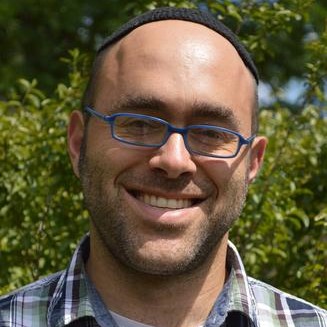
Ari Hoffman
Credentials
Licensed Abroad
Finances
- Chad Ness
- Mevo Beitar
- 0723971398
- Email Me
-
 Business HoursEveningsFridays/Weekends
 Verified
Credentials
Couples and Family Therapist, Licensed Professional Counselor
MA, LPC
Finances
350-500 NIS
None
Free Consultation

ABOUT THE THERAPIST
Relationship are where the rubber of your personal growth meets the road of reality.
Let's go there and work on that together.
Together we'll investigate and explore with curiosity about your and your partner's relational patterns. First we'll learn why you do what you do. Then we'll take it to the next level and understand what you really need from your partner. And then we'll work on how you both can meet each other's needs in a more effective and nourishing way.
- Couples relationship difficulties and frustrations
- Family relationship challenges
- Business relationship challenges
- Anxiety, stress, existential angst
- Trauma
- Parenting issues
My job as your therapist is to to support and encourage your growth as an indivudal, couple, or family. Sometimes this experience is quite gentle and once in a while it will come in the form of a well placed kick in your ass. Usually it's somewhere in the middle.
I use many different techniques to fulfill my role, those techniques come from among these different areas where I have trained extensively and have years of experience of practice: Hakomi somatic mindfulness, Emotion Focused Therapy, Family Systems Therapy, Trauma informed therapy.
I work both in person in my clinic in Mevo Beitar and virtually by Zoom.
You can reach out to me through here or go on my website and schedule a free initial consult.
Either way I look forward to seeing you.
QUALIFICATIONS
MA
University of Colorado
2007
LPC
Licensed Professional Counselor in Colorado
Degree
MAEducation
University of ColoradoYear of Graduation
2007Degree
LPCEducation
Licensed Professional Counselor in ColoradoYear of Graduation
Years in Practice
17
LICENSED ABROAD
License Number
Colorado #LPC 0005647ADDITIONAL CREDENTIALS
EMDR training Level 1&2 - 2012 (EMDR Institute)
DISTANCE COUNSELING
Online Therapy
PRIMARY SPECIALTIES
Couples / Relationship / Marriage Counseling
Family Issues
Parenting Issues / Training
Trauma / Post Traumatic Stress Disorder PTSD
ADDITIONAL SPECIALTIES
N/A
CLIENT FOCUS
Population
Adults
Couples
Families
Men
Women
Languages Spoken
English
Native Language
English
TREATMENT APPROACH
Body-Mind PsychotherapyBody-mind psychotherapy is an integrative approach to psychological treatment that draws from both psychotherapeutic and somatic/body-based approaches. It emphasizes the interconnection between physical, emotional, cognitive and spiritual aspects of being. This approach seeks to help individuals explore how physical sensations, emotions, thoughts and beliefs influence their behavior and well-being. Through this exploration, individuals can gain insight into how the body and mind interact to create patterns of behavior, and how those patterns can be changed to promote healing and wellness.
Cognitive Behavioral Therapy (CBT)Cognitive Behavioral Therapy (CBT) is a type of psychotherapy that focuses on how one's thoughts, feelings and behaviors are connected and can be changed. It is based on the idea that how we think (cognition) and how we feel (emotion) can influence how we behave. CBT helps people identify and challenge distorted thinking and replace it with more balanced thinking, leading to improved mood and behavior. ‘Homework’, usually containing practical writing exercises, is often completed by the client between sessions to reinforce the therapy. Examples of tools that practitioners often use are journaling, challenging beliefs, and mindfulness.
Emotion-Focused TherapyEmotion-focused therapy (EFT) is a type of psychotherapy that is based on the idea that emotions play a key role in a person’s mental health. EFT focuses on helping people to identify, accept, and manage their emotions in a healthy and productive way. The goal of EFT is to help people identify and express their emotions, understand how those emotions impact their behavior, and learn how to manage their emotions in a way that is adaptive and healthy. EFT is a research-based approach to psychotherapy that has been found to be effective in helping people manage a variety of mental health conditions. It has been used successfully in the treatment of individuals, couples, and families, as well as with groups. EFT is particularly beneficial for people who struggle with emotional regulation, mood disorders, anxiety, trauma, and relationship issues.
Existential PsychotherapyExistential psychotherapy is a form of psychotherapy that emphasizes an individual’s subjective experience of existence. It is a philosophical approach to psychotherapy that views the individual as ultimately responsible for creating a meaningful life. This form of psychotherapy helps individuals explore their subjective experiences, understand their personal values and beliefs, find ways to live more authentically, and make meaningful choices. The ultimate goal is to help the individual reach a greater sense of self-awareness and personal fulfillment.
Eye Movement Desensitization and Reprocessing Therapy (EMDR)Eye Movement Desensitization and Reprocessing (EMDR) is a psychotherapy treatment that was originally designed to alleviate the distress associated with traumatic memories. It uses a structured approach to address the past events that may be causing current distress, and uses bilateral stimulation, such as eye movements, to activate different neural networks in the brain in order to reduce symptoms of trauma. EMDR has been found to be effective for a wide range of mental health issues, including anxiety, depression, and PTSD.
Family Systems TherapyFamily Systems Therapy is an approach to psychotherapy that emphasizes the importance of understanding how the family functions as a whole, and how individual family members interact and affect one another. It focuses on how family dynamics, such as communication patterns, roles, and power dynamics, shape behavior, and how changing these dynamics can lead to positive change. Family Systems Therapy is a collaborative approach, where the therapist works with the family as a whole to identify and address areas of conflict and distress.
Person-Centered Therapy (Rogerian Therapy)Person-centered therapy, or Rogerian therapy, was developed by Carl Rogers in the 1940’s. It is a form of talk therapy that emphasizes the importance of providing psychological safety, unconditional positive regard, and empathic understanding to clients. This type of therapy is based on the belief that individuals have an innate capacity for self-actualization and self-understanding and that the therapist's role is to provide a supportive environment in which this process can take place. Through the use of active listening, open-ended questions, and non-judgmental reflection, the therapist helps the client to explore their thoughts, feelings, and experiences in a safe and accepting environment. By doing so, clients are able to gain insight into their issues, develop a greater understanding of themselves, and work towards personal growth.
Hakomi Somatic Mindfulness
SERVICES OFFERED
Individual Therapy
Couples Therapy
Family Therapy
Hadrachat Horim