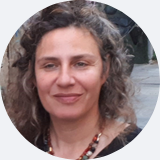
Talya Halkin
Credentials
Finances
- Tzahala
- Tel Aviv, 6908011
 Verified
Credentials
Expressive Arts Therapist
M.A.A.T.
Finances
350-500 NIS
None
Free Consultation
ABOUT THE THERAPIST
I offer a warm, supportive space for women navigating emotional and relationship difficulties, motherhood, and additional life transitions, as well as therapeutic support for parents and their children. As a bilingual therapist who was raised and educated between Israel and the US, I am deeply familiar with the unique issues and concerns of individuals and families living between cultures.
I believe that meaningful change begins with feeling understood and having the space to explore our experiences with curiosity and compassion. Together, we can explore the emotions, relationships, and patterns that may be contributing to difficulties, while discovering new ways of responding to ourselves and the people around us.
My approach is integrative, drawing on relational and psychodynamic perspectives, expressive arts therapy, and body awareness, with particular attention to the connections between emotional experience, the body, creativity, and relationships. Our work together may take place entirely through conversation, or, when appropriate and comfortable for you, incorporate imagery, movement, somatic awareness, creative expression, or other experiential approaches. What matters is finding a way of working that feels meaningful and helpful to you.
I work with women experiencing anxiety, low mood, stress, emotional exhaustion and burnout, relationship difficulties, and periods of uncertainty or change. I have a particular interest in the emotional challenges surrounding motherhood, parenting, and partnership, as well as the unique psychological concerns that women face in midlife and beyond. I also work with children and their parents around emotional regulation, behavioral and developmental challenges, and difficulties in family relationships. Depending on the child's needs, therapy may involve individual sessions, parent-child sessions, and parental guidance. Alongside my private practice, my work with women, parents and children in Israel’s public health sector had broadened and deepened my clinical experience.
I see my role as creating a safe, collaborative relationship in which you can feel free to bring the different parts of yourself, including feelings that may be difficult to understand or express. I view therapy not as a struggle against aspects of ourselves, but as a journey to become ourselves, trust our own resources, and believe in our power to choose – to connect, create, and love more fully. One of the most important lessons I have learned as a therapist is that healing occurs when we trust that we are not alone, that it is safe to receive the support of others, and to reach out into the world while coming home to ourselves.
Alongside individual therapy, I offer creative and experiential workshops for women, with a particular interest in midlife as a period of reflection, transition, and renewed possibilities for personal growth, professional development and self-expression.
Prior to training as a therapist, I earned a BA and MA from Columbia University in the City of New York, where my academic research focused on the intersection between psychology, somatic experience, and creative processes.
QUALIFICATIONS
M.A.A.T.
Kibbutzim College of Education
2022
Degree
M.A.A.T.Education
Kibbutzim College of EducationYear of Graduation
2022Years in Practice
4
DISTANCE COUNSELING
Online Therapy
PRIMARY SPECIALTIES
Anxiety / Panic
Family Issues
Life Transitions
Parenting Issues / Training
Body-oriented psychotherapy
ADDITIONAL SPECIALTIES
Behavioral Concerns In Children
Holistic
Self-Esteem
Stress Management
Parent and child therapy
CLIENT FOCUS
Population
Adults
Women
Parents and children
Languages Spoken
English
Hebrew
French
Native Language
English
TREATMENT APPROACH
Art TherapyArt therapy has clients express themselves through creative mediums such as drawing, painting, collage, coloring, or sculpting. Clients can interpret their subconscious world that is expressed in their art which could lead to a better understanding of their feelings and behavior. Artistic talent is not a prerequisite for art therapy as it’s not as much about the end result as much as it is about the process. The therapist looks for meaning in the creative choices of the work and the clients’ inner world. This therapeutic method enables clients to express their inner thoughts and feelings through creative expression rather than just talking about them.
Body-Mind PsychotherapyBody-mind psychotherapy is an integrative approach to psychological treatment that draws from both psychotherapeutic and somatic/body-based approaches. It emphasizes the interconnection between physical, emotional, cognitive and spiritual aspects of being. This approach seeks to help individuals explore how physical sensations, emotions, thoughts and beliefs influence their behavior and well-being. Through this exploration, individuals can gain insight into how the body and mind interact to create patterns of behavior, and how those patterns can be changed to promote healing and wellness.
Dance / Movement Therapy (DMT)Dance Movement Therapy (DMT) is a psychotherapeutic approach that uses movement as a medium for self-expression, exploration, and healing. It is based on the belief that the body and mind are interconnected, and that the body is a source of knowledge and wisdom. Through the practice of DMT, individuals are encouraged to explore movement in order to gain insight into their emotional state and gain insight into the underlying causes of their difficulties. The goal of DMT is to help individuals identify, process, and integrate their emotions, thoughts, and behaviors in order to improve their overall well-being.
DreamworkModern dreamwork asserts that the only person that can make meaning of their dream is the dreamer, which is what separates dreamwork from dream interpretation. In dreamwork, the practitioner is a guide in the exploration of the dream, with the client making meaning of the dream for themselves. The reason the practitioner is only a guide is because thoughts, emotions, as well as meaning of symbols are deeply personal and subjective. Dreams can be used to uncover hidden feelings and beliefs, develop self-awareness, and gain insight into problems and potential solutions. Dreamwork is often paired with other therapeutic modalities.
Expressive Arts TherapyExpressive Arts Therapy is particularly beneficial for clients who struggle with describing what they are feeling verbally. Through imagination and creation of different art forms, clients are able to interpret and communicate their inner world and catalyze healing. Expressive arts therapy can involve the use of multiple modalities, such as visual arts, music, movement, drama, storytelling, poetry, and play. It is used to help individuals of all ages, including children and adults, to explore their feelings, reconcile emotional conflicts, foster self-awareness, manage behavior and addictions, develop social skills, improve reality orientation, and solve problems.
Filial TherapyFilial therapy is based on the idea that children learn best through their relationships with their parents and other caregivers. In filial therapy, the practitioner works with the child and parent(s) together, teaching the parent(s) specific skills and techniques to use with their child. These may include active listening, reflective communication, and other strategies designed to help parents better understand and respond to their child's needs and emotions. The goal of filial therapy is to help parents become more attuned and responsive to their child, and to create a more positive and supportive family environment. Filial Therapy encourages parents to become their child's primary therapist, helping them to develop a stronger relationship through play. This type of therapy has been used to help children with a variety of issues, from anxiety and depression to disruptive behavior and learning disabilities. It is a powerful way to help a child feel more connected to their parents and to the world around them.
Play TherapyPlay therapy is an evidence-based, developmentally appropriate form of intervention used to facilitate emotional, cognitive, and social growth in children. Play therapy is based on the premise that play is the child's natural medium of self-expression and can be used to assess and help a child work through difficult emotions, thoughts, and behaviors. The goal of play therapy is to help children develop the skills and abilities to navigate life stressors, and build self-esteem. During treatment, the therapist creates a comfortable, safe environment (a playroom) for the child to play with as few limits as possible. The toys in the playroom are intended to encourage the child to express his or her feelings and develop healthier behaviors. The child’s “play” with these toys serve as the child’s symbolic words, which may be difficult to express otherwise.
SERVICES OFFERED
Individual Therapy
Hadrachat Horim
Workshops/Educating