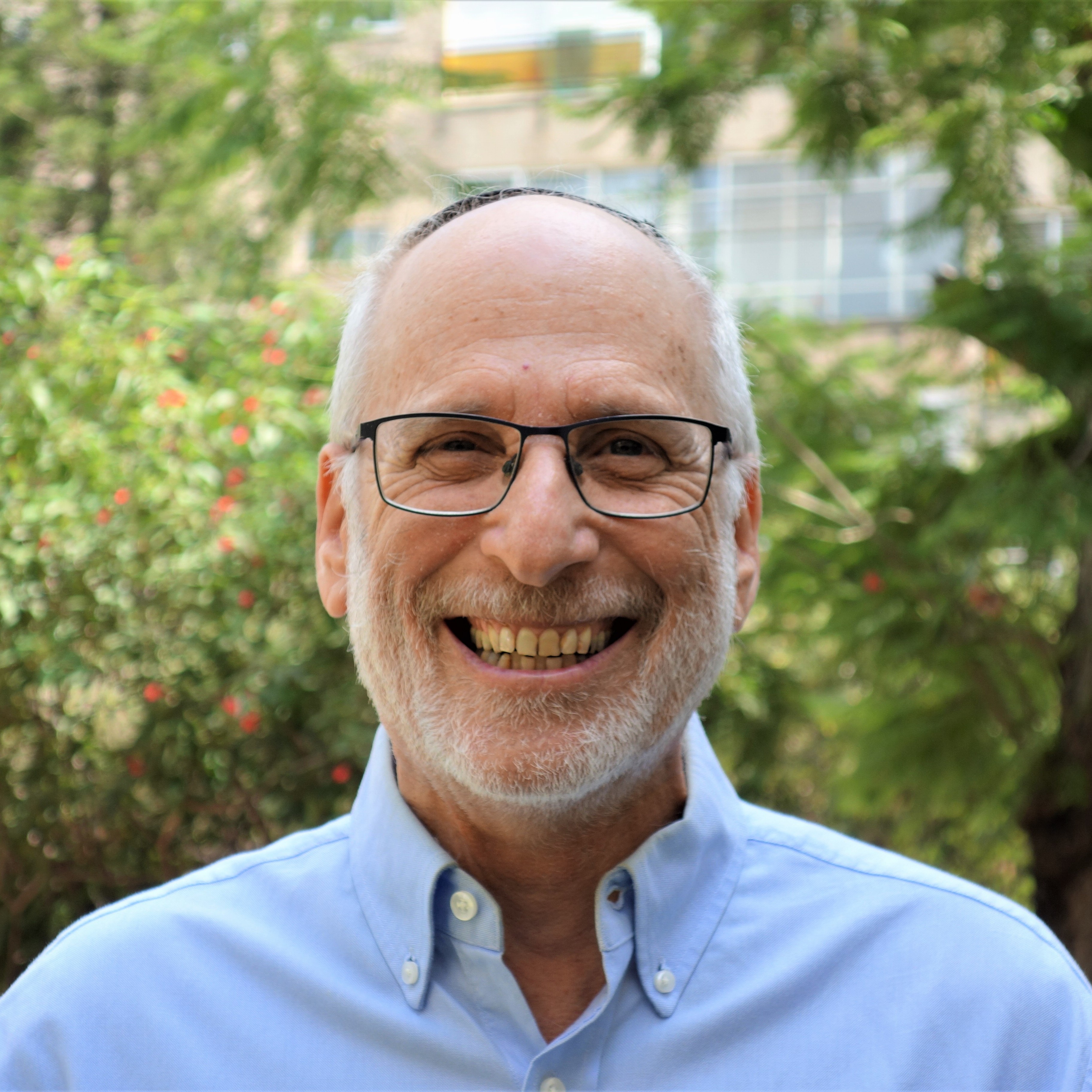
Mike Gropper
Credentials
Licensed in Israel
Finances
- 198 Achuza Street
- Raanana, 43560
 Verified
Credentials
Clinical Social Worker, Psychotherapist
MSW, MA, DSW
Finances
350-500 NIS
None
Sliding Scale
Discount for Soldiers
ABOUT THE THERAPIST
I have been in practice for over 40 years and have taught at major universities as well as worked at a an award winning program in Jaffa that helps poverty stricken inner city children, but what I love the most and have always loved is doing clinical treatment with adults, couples, teens and children and particularly new olim.
My approach is to listen empathetically and try to understand what brought a client(s) into my office. This is the critical beginning and sometimes this can take more than one meeting. I try to use the empathy that I have to establish trust and understanding and ultimately to identify what are the most important goals of therapy for the client. Therapy does not have to be long-term, but if someone is looking for this, I think that this is a worthy goal.
Many people today want a more goal oriented and problem-solving approach which I use often. The most important question for me is to evaluate with my client if he or she thinks that the treatment is helping, When therapy is over, time to recapitulate and go over what has been learned and changed so that my client can feel the ownership of these changes and also positive about the future.
I have excellent diagnostic skills and very widely trained in clinical work with many populations. I am a good listener and very empathetic but always have my eye on the goals of treatment. These can also change. I am an out of the box thinker and over the years my ability has helped clients who have turned to many before me only to find success in some of my creative thinking as a practitioner.
I am good at working with couples and developing the trust with each partner. I know when to use humor appropriately with my clients. Creating the bond and trust with me is something I am good with and have done this successfully with both adults, teens and children. I have a lot of biological and neurological skills that I utilize in my practice and sometimes very useful when working with psychiatrists.
My role as a therapist is first and foremost to understand what the problems are and to choose the correct pathways with my client that I think will help him or her to reach the goals of treatment. I also think that I am for many a role model and teacher.
Warm and attractive office. I sometimes do online therapy which is something that I am very comfortable with and have been successful all over the world.
QUALIFICATIONS
MSW
Adelphi University School of Social Work
1977
MA
New School for Social Research
1971
DSW
Adelphi University School of Social Work
1986
Degree
MSWEducation
Adelphi University School of Social WorkYear of Graduation
1977Degree
MAEducation
New School for Social ResearchYear of Graduation
1971Degree
DSWEducation
Adelphi University School of Social WorkYear of Graduation
1986Years in Practice
45
LICENSED IN ISRAEL
Registered Social Worker in Israel
12482
ADDITIONAL CREDENTIALS
National Association of Social Workers - 1979
DISTANCE COUNSELING
Online Therapy
PRIMARY SPECIALTIES
Addictions
Couples / Relationship / Marriage Counseling
Mood Disorders
Parenting Issues / Training
Trauma / Post Traumatic Stress Disorder PTSD
ADDITIONAL SPECIALTIES
Adjustments
Anxiety / Panic
Attention Deficit Hyperactivity Disorder (ADHD)
Bipolar Disorder
Depression
Dissociative Disorders
Family Issues
Phobias
Self-Harm / Suicide
Stress Management
CLIENT FOCUS
Population
Adolescents
Adults
Couples
Men
Women
Olim; Pre-army / Post-army
Languages Spoken
English
Native Language
English
TREATMENT APPROACH
Attachment-Based Family Therapy (ABFT)Attachment-based family therapy (ABFT) is a form of psychotherapy that focuses on the family's relationships and communication patterns. It is based on the theory that strong and secure attachments between family members are essential for emotional health and well-being. The goal of ABFT is to identify any problems in family relationships, enable family members to become more attuned to each other’s needs, and build a secure bond between them. It also helps family members to practice healthy communication skills, learn effective problem-solving strategies, and build trust within the family.
Body-Mind PsychotherapyBody-mind psychotherapy is an integrative approach to psychological treatment that draws from both psychotherapeutic and somatic/body-based approaches. It emphasizes the interconnection between physical, emotional, cognitive and spiritual aspects of being. This approach seeks to help individuals explore how physical sensations, emotions, thoughts and beliefs influence their behavior and well-being. Through this exploration, individuals can gain insight into how the body and mind interact to create patterns of behavior, and how those patterns can be changed to promote healing and wellness.
Cognitive Behavioral Therapy (CBT)Cognitive Behavioral Therapy (CBT) is a type of psychotherapy that focuses on how one's thoughts, feelings and behaviors are connected and can be changed. It is based on the idea that how we think (cognition) and how we feel (emotion) can influence how we behave. CBT helps people identify and challenge distorted thinking and replace it with more balanced thinking, leading to improved mood and behavior. ‘Homework’, usually containing practical writing exercises, is often completed by the client between sessions to reinforce the therapy. Examples of tools that practitioners often use are journaling, challenging beliefs, and mindfulness.
Collaborative Couple Therapy (CCT)CCT practitioners view conflicts as conversation starters and a way to foster intimacy between partners. Practitioners assert that relational conflict happens when partners are unable to express their true thoughts and feelings. This may lead them to act in ways that hurt their partner, for example, acting in an ‘adversarial’ or ‘withdrawn’ way. The goal of the therapy is to help partners shift into a more collaborative way to solve problems and therefore improve their relationship. The therapist works to create a safe and supportive environment where each partner can openly express their feelings and concerns, while also addressing any areas of conflict. Collaborative couple therapy focuses on understanding the perspectives of both partners, exploring the needs of each partner, and developing positive communication and problem-solving skills. This approach also emphasizes the development of trust, understanding, and mutual respect within the relationship.
Family Systems TherapyFamily Systems Therapy is an approach to psychotherapy that emphasizes the importance of understanding how the family functions as a whole, and how individual family members interact and affect one another. It focuses on how family dynamics, such as communication patterns, roles, and power dynamics, shape behavior, and how changing these dynamics can lead to positive change. Family Systems Therapy is a collaborative approach, where the therapist works with the family as a whole to identify and address areas of conflict and distress.
Mindfulness-Based Cognitive Therapy (MBCT)Mindfulness-Based Cognitive Therapy (MBCT) is a form of therapy that combines cognitive behavioral therapy with mindfulness practices. It is based on the idea that our thoughts, emotions, and physical sensations can affect our mental health. MBCT helps individuals become aware of their thoughts, emotions, and physical sensations in order to gain insight and control over them. MBCT helps clients learn how to recognize their sense of being and see themselves as separate from their thoughts and moods. This separation can free the client from thought patterns in which the repeated negative messages may be dominating the client’s focus. After developing an awareness of the separation between thoughts, emotions, and the self, people in treatment may find that while the self and the emotions may exist simultaneously, they do not have to exist within the same dimension. The healing can take place when one learns how to interject positive thoughts into negative moods and thereby create a shift in mood.
Rational Emotive Behavioral Therapy (REBT)Rational Emotive Behavioral Therapy (REBT), originally developed by Albert Ellis, laid the foundation for what is now known as Cognitive Behavioral Therapy. It is a philosophically and empirically based psychotherapy that focuses on resolving emotional and behavioral problems by identifying and challenging irrational beliefs. Based on the notion that we are typically unaware of our deeply embedded irrational thoughts and how they affect us on a day-to-day basis, Ellis established three guiding principles of REBT. These are known as the ABCs: activating events, beliefs, and consequences. Rewiring old patterns of thinking requires a lot of work and commitment, so active participation and openness in the therapy process is essential to success.
Solution-Focused Brief Therapy (SFBT)Solution-focused therapy is a type of therapy that focuses on what is going right in a person’s life, as opposed to what is going wrong. It is based on the premise that when a person can identify what is working, they can build on it and make positive changes to the areas of their life that need improvement. A therapist using this approach will often ask questions designed to bring out a person’s strengths and resources, rather than focusing on problems or past issues. The aim of this type of therapy is to help people find solutions to their current problems, in order to build a better future. A solution-focused therapist encourages those in treatment to develop a vision of the future and offers support and guidance as they determine the skills, resources, and abilities needed to achieve that vision successfully.
Somatic Experiencing (SE)Somatic Experiencing (SE) is a body-oriented approach to the healing of trauma and other physical and psychological stresses. It is based on the idea that the body is a powerful source of healing and that unresolved trauma can be resolved through the process of bringing awareness and attention to the physical sensations of the body. By gradually and gently guiding individuals through the sensations associated with their traumatic experience, SE can help to restore balance and well-being more quickly and effectively than traditional psychotherapy. SE utilizes the body’s natural ability to regulate and heal itself and supports individuals in developing more resilience and self-regulation. Somatic Experiencing aims to help people move past the place where they might be “stuck” in processing a traumatic event. SE is often used to treat symptoms of post-traumatic stress disorder (PTSD), anxiety, depression, and other mental health issues.
Systems Theory / TherapySystems therapy is a type of psychotherapy that focuses on understanding how people's behavior is affected by their relationships with others. This form of therapy is based on the idea that the individual is embedded within a larger system, such as a family unit or work environment, and that changes to that system can cause changes in an individual's behavior. Systems therapy emphasizes the importance of understanding how these systems interact and how they can be changed to improve the individual's mental health. The therapist works to identify patterns of behavior in the system, identify areas of conflict or stress, and help the individuals develop strategies to make changes within the system that will lead to healthier outcomes.
Trauma-Focused Cognitive Behavioral Therapy (TF-CBT)Trauma-Focused Cognitive Behavioral Therapy (TF-CBT) is an evidence-based practice used to help children, adolescents and their parents who have experienced a single or multiple traumatic events. This type of therapy combines cognitive and behavioral strategies to help people process their traumatic experiences, manage their distress, develop coping skills, and restore their sense of safety and well-being. TF-CBT focuses on education and skill-building, creating an environment of safety and trust, and using therapeutic activities to help people understand their responses and control their symptoms. Children are shown how perceptions may be distorted and are given the tools to redesign those perceptions. TF-CBT is a skills-based model, and it requires the child and parent to practice its components in order to be optimally effective. Parents and children are commonly asked to practice skills at home.
SERVICES OFFERED
Individual Therapy
Consultation
Couples Therapy
Hadrachat Horim