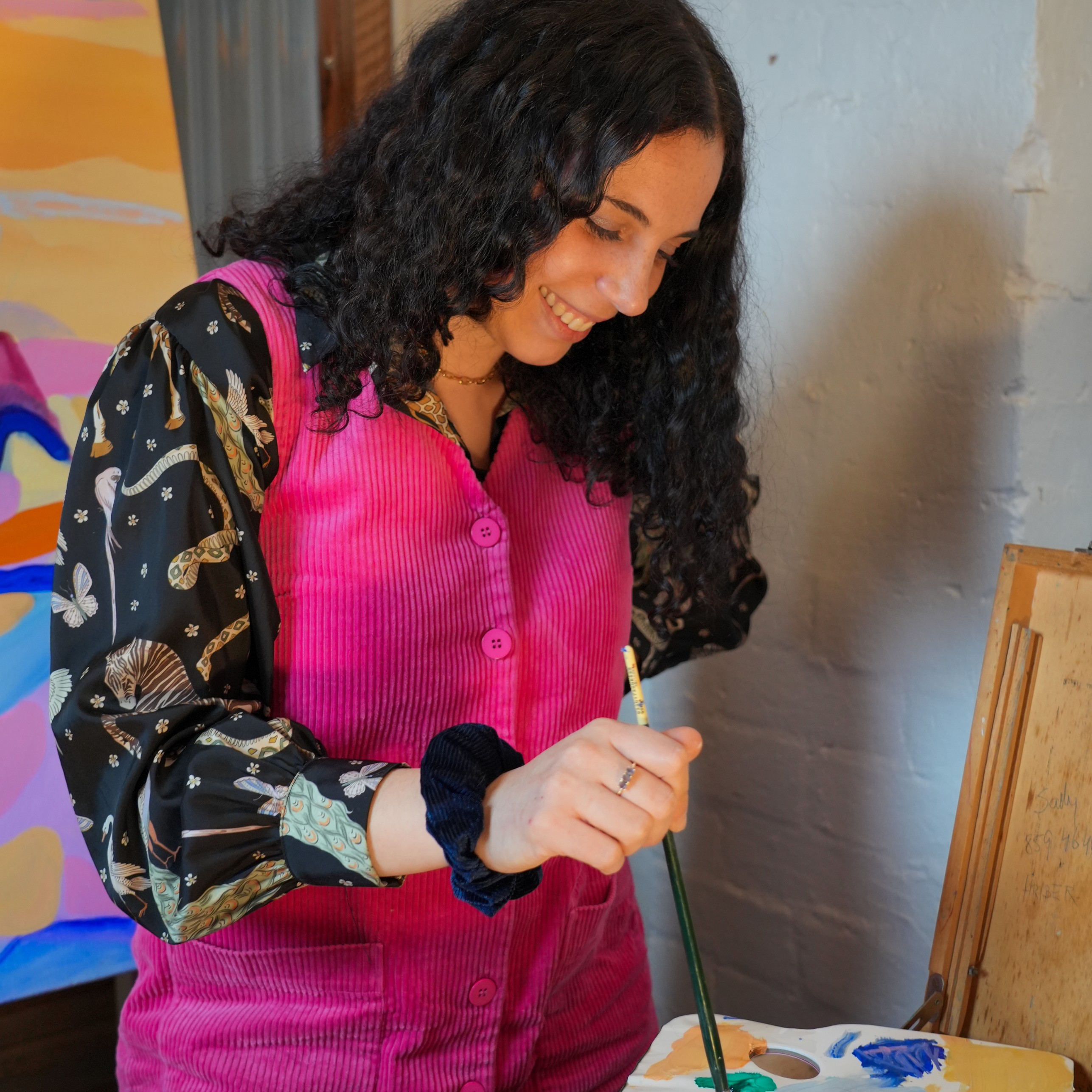
Abigail Reisner
Credentials
Finances
- Levontin Street 12
- Tel Aviv Yafo, 6511201
 Verified
Credentials
Expressive Arts Therapist
MA
Finances
250-350 NIS
None
Sliding Scale | Free Consultation | Student Discount
ABOUT THE THERAPIST
Hi, I'm Abigail - I am a qualified Art Therapist with a Master of Art Therapy degree and over six years of clinical experience in psychiatric and mental health settings in Australia. I help adults and adolescents navigate and explore their inner world through colour, image, and creative process.
My approach is grounded in psychodynamic principles — the belief that meaningful, lasting change happens not through instruction or interpretation, but through the slow, safe surfacing of what's been difficult to hold or say. I trained and worked for years within psychiatric hospital settings, including as the sole art therapist in a high-security forensic mental health unit, supporting people navigating complex trauma, psychosis, and emotional isolation.
- Trauma and overwhelming or hard-to-articulate emotional experiences
- Grief, guilt, and shame
- Anxiety and emotional dysregulation
- Identity confusion or feeling disconnected from yourself
- Difficulty trusting others or opening up in traditional talk therapy
- Psychosis and complex mental health conditions, including schizophrenia
- Feeling isolated, misunderstood, or "stuck" in patterns that words haven't shifted
I follow your lead, and help you find your own language for it, in your own time. That might look like quiet space to create, working alongside you so it feels shared rather than watched, or choosing materials — paint, clay, pastels — that meet where you are in the moment. Above all, it means holding steady, consistent presence, so even the hardest material feels manageable to approach.
Available to provide: Individual Art Therapy, Group Art Therapy
QUALIFICATIONS
MA
La Trobe University
2019
Degree
MAEducation
La Trobe UniversityYear of Graduation
2019Years in Practice
6
ADDITIONAL CREDENTIALS
Member of ANZACATA #49451421, ( Australian, New Zealand and Asian Creative Arts Therapies Association) - practising member on leave
BA (Fine Art) - Royal Melbourne Institute of Technology - 2015
DISTANCE COUNSELING
Online Therapy
PRIMARY SPECIALTIES
Depression
Life Transitions
Personality Disorders
Schizophrenia / Psychosis
Trauma / Post Traumatic Stress Disorder PTSD
ADDITIONAL SPECIALTIES
Anxiety / Panic
Borderline Personality Disorder
Learning Disabilities
Psychosomatic Disorders
Stress Management
Forensic mental health
CLIENT FOCUS
Population
Adolescents
Adults
LGBTQ
Men
Women
Geriatric
Languages Spoken
English
Hebrew
Native English speaker, Hebrew is basic but improving
Native Language
English
TREATMENT APPROACH
Art TherapyArt therapy has clients express themselves through creative mediums such as drawing, painting, collage, coloring, or sculpting. Clients can interpret their subconscious world that is expressed in their art which could lead to a better understanding of their feelings and behavior. Artistic talent is not a prerequisite for art therapy as it’s not as much about the end result as much as it is about the process. The therapist looks for meaning in the creative choices of the work and the clients’ inner world. This therapeutic method enables clients to express their inner thoughts and feelings through creative expression rather than just talking about them.
Psychodynamic TherapyPsychodynamic therapy is a form of therapy that focuses on the unconscious mind and how it affects behavior. It works to help people understand and work through past experiences and feelings that may be causing difficulties in the present. This type of therapy encourages individuals to explore their emotions, relationships, and behaviors in order to gain insight into their current difficulties. It can help individuals better understand themselves and their motivations, and gain insight into how past events have impacted their current lives. People tend to develop defense mechanisms when faced with challenges in life. Defense mechanisms may keep painful feelings, memories, and experiences in the unconscious. A few common defense mechanisms include: denial, repression, and rationalization. Psychodynamic therapists encourage people to speak freely about their emotions, desires, and fears. Being open may help uncover vulnerable feelings that have been pushed out of conscious awareness. According to psychodynamic theory, behavior is influenced by unconscious thought. Once painful feelings are brought forth and processed, the defense mechanisms are no longer needed and a person in treatment can start changing unhelpful patterns when coping with life’s challenges.
SERVICES OFFERED
Individual Therapy
Group Therapy
Workshops/Educating