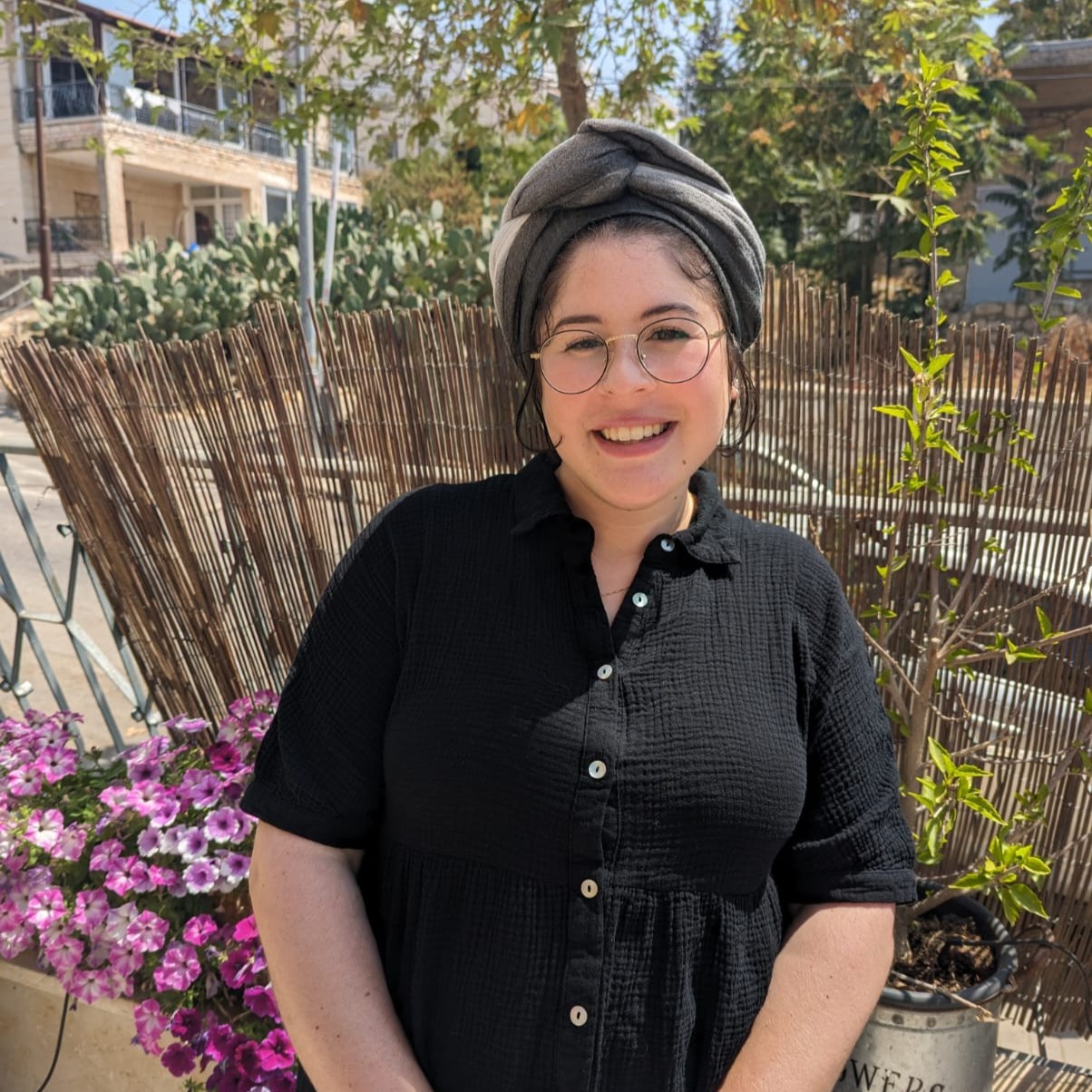
Lila Wiener
Credentials
Licensed in Israel
Licensed Abroad
Finances
- Tshernichovsky 28
- Jerusalem, 9258129
- 0723971291
- Email Me
- Free Consultation
-
 Business HoursEveningsFridays/Weekends
 Verified
Credentials
Clinical Social Worker
LMSW
Finances
350-500 NIS
None
Sliding Scale | Free Consultation | Student Discount

ABOUT THE THERAPIST
I provide therapy to individuals, couples, and families seeking clarity, connection, balance, and meaning in their lives. My goal is to create a space where you feel safe, heard, and supported in your therapeutic journey.
My focus is to support you in managing your emotions, building strong connections, and creating meaningful change in your life. I value creating a warm, nonjudgmental therapeutic space where clients feel understood, supported, and empowered to grow.
With individuals, I help manage depression, anxiety, trauma triggers, and other mental health challenges. I help individuals connect and build healthy relationships with others by communicating effectively. With couples and families, I help partners and family members strengthen communication, rebuild trust, navigate conflict, and foster a deeper emotional connection.
My role as a therapist is to provide a warm and supportive space where we can explore your concerns together. We'll work on processing emotions, reducing unwanted behaviors, improving coping skills, building self-confidence, and strengthening interpersonal relationships.
I offer both in-person and online therapy.
QUALIFICATIONS
LMSW
Wurzweiler School of Social Work
2024
Degree
LMSWEducation
Wurzweiler School of Social WorkYear of Graduation
2024Years in Practice
2
LICENSED IN ISRAEL
Registered Social Worker in Israel
48602
LICENSED IN THE USA
ADDITIONAL CREDENTIALS
Level 1 IFS - 2025
Level 1 Gottman Method for Couples - 2024
DISTANCE COUNSELING
Online Therapy
PRIMARY SPECIALTIES
Anxiety / Panic
Couples / Relationship / Marriage Counseling
Family Issues
Mood Disorders
Trauma / Post Traumatic Stress Disorder PTSD
ADDITIONAL SPECIALTIES
Addictions
Attention Deficit Hyperactivity Disorder (ADHD)
Autism Spectrum
LGBTQ
Obsessive Compulsive Disorder (OCD)
Postpartum Depression
Self-Esteem
Stress Management
CLIENT FOCUS
Population
Adolescents
Adults
Couples
Families
LGBTQ
Men
Women
Languages Spoken
English
Native Language
English
TREATMENT APPROACH
Dialectical Behavior Therapy (DBT)Dialectical Behavior Therapy (DBT) is a type of cognitive-behavioral therapy developed by Marsha Linehan to help people learn to better manage and cope with emotions and stress. It focuses on developing skills and strategies to help regulate emotions, improve relationships and communication, and reduce self-destructive behaviors. Through DBT, people learn to identify and modify unhealthy thoughts and behaviors, while also learning to accept and validate their own feelings. DBT teaches skills to help individuals become aware of and accept and regulate their emotions, tolerate distress, and improve interpersonal relationships.
Emotion-Focused TherapyEmotion-focused therapy (EFT) is a type of psychotherapy that is based on the idea that emotions play a key role in a person’s mental health. EFT focuses on helping people to identify, accept, and manage their emotions in a healthy and productive way. The goal of EFT is to help people identify and express their emotions, understand how those emotions impact their behavior, and learn how to manage their emotions in a way that is adaptive and healthy. EFT is a research-based approach to psychotherapy that has been found to be effective in helping people manage a variety of mental health conditions. It has been used successfully in the treatment of individuals, couples, and families, as well as with groups. EFT is particularly beneficial for people who struggle with emotional regulation, mood disorders, anxiety, trauma, and relationship issues.
Gottman MethodThe Gottman Method is an evidence-based approach to couples therapy that is designed to help couples strengthen their relationships and resolve conflicts. This method is based upon decades of research on thousands of couples and utilizes an approach that is both structured and collaborative. The method is designed to help couples increase respect, affection, and closeness, break through and resolve conflict, generate greater understanding, and to keep conflict discussions calm. It emphasizes the importance of self-regulation, constructive communication, and creating a safe environment for couples to talk and work through their issues. During sessions, couples work on skills such as active listening and expressing needs and feelings effectively. Couples are also given tools to identify and work through conflicts by using problem-solving techniques and developing strategies to manage emotions and reduce stress.
Internal Family Systems (IFS)Internal Family Systems (IFS) is an evidence-based psychotherapy that uses the metaphor of an internal family of parts to help people gain awareness of how different parts of themselves can interact in healthy and unhealthy ways. IFS encourages people to become curious about their different parts, with the goal of helping them gain access to their true Self or core. Through this process, people can learn to recognize and care for the different parts of themselves, as well as develop compassionate understanding for the origins of their parts. A key principle of IFS is that each part within the person has its own positive intention and is trying to protect the person in some way. By understanding the positive intention of each part, the practitioner and client can work together to help the parts feel heard and understood, and to find more adaptive ways of meeting their needs. IFS has been found to be an effective treatment for a variety of mental health issues, including depression, anxiety, trauma, and relationship issues.
Interpersonal Psychotherapy (IPT)IPT focuses on the relationships and interactions an individual has with others. It is based on the premise that the way that we interact with others can have a significant impact on our emotional well-being. During IPT sessions, the practitioner will work with the client to identify patterns of behavior and communication that may be contributing to their emotional distress. They will then help the client learn new ways of interacting with others, as well as teach them coping skills to manage difficult emotions. It is a time-limited therapy, typically lasting between 12-16 weeks, with the goal of helping the client develop long-term coping skills.
SERVICES OFFERED
Individual Therapy
Couples Therapy
Family Therapy
Group Therapy