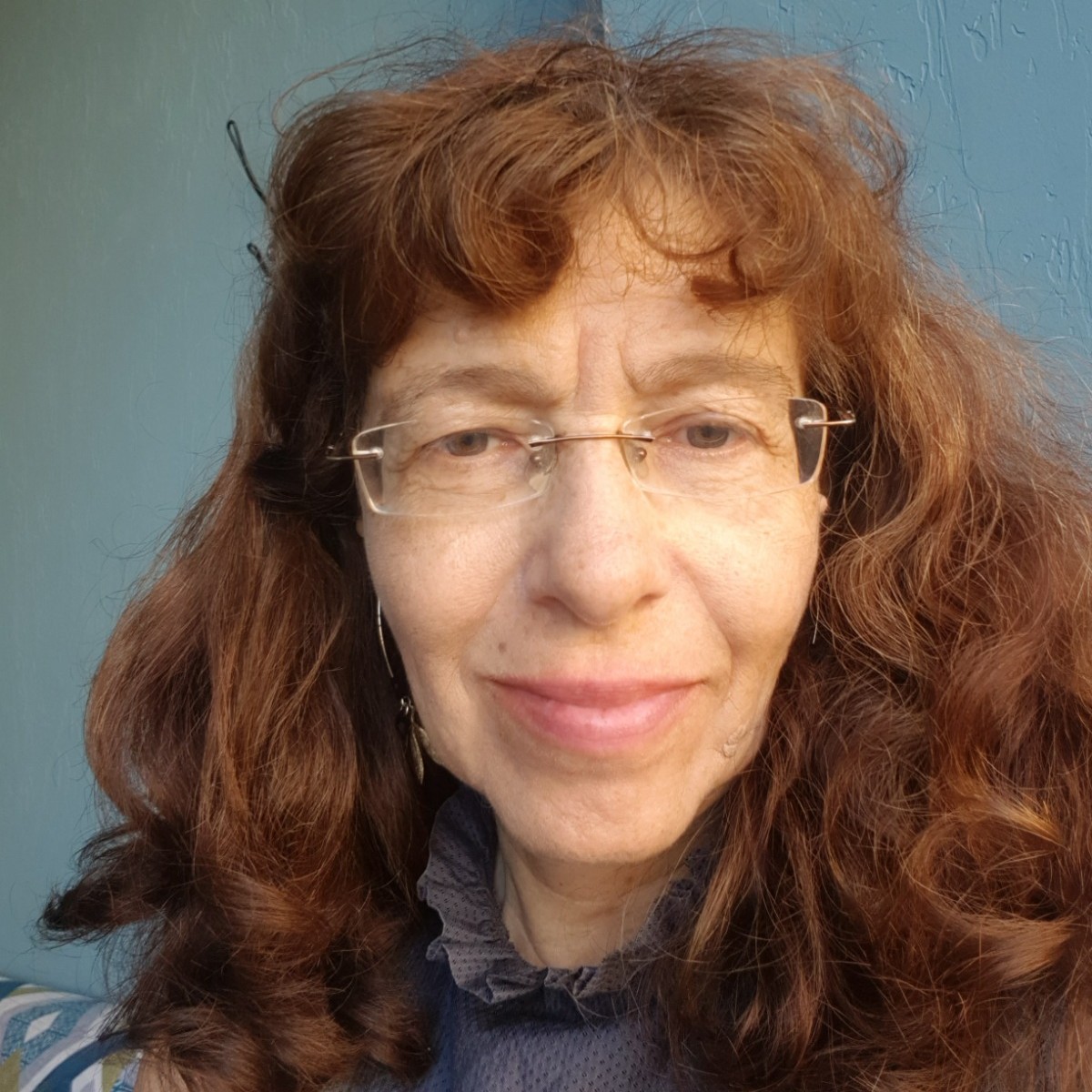
Inda Kriksunov
Credentials
Finances
- Yehoshua ben Gamla 12
- Jerusalem
 Verified
Credentials
Expressive Arts Therapist, Psychotherapist
M.A.A.T.
Finances
350-500 NIS
Private Insurance
Sliding Scale
ABOUT THE THERAPIST
I am a sensitive, creative and resourseful therapist using integrative approach to understand the client's needs and to figure out together the best way to help solve the problems and improve the wellbeing.
Being sensitive, full acceptance, being the safe place for the client. Trying to find the best and most suitable approach: CBT, mindfulness, art therapy or others. We are together on this journey to enhance your mental health. I never give up.
Life transitions, managing crisis, problems faced as the result of immigration, problem solving. OCD, depression, anger management, panic attacks anxiety. Parents consulting ( hadrachat horim) I have a lot of experience with children, young adults and adults.
I listen, accept, analyze, present a new point of view, give tools, We are together on this journey. I give a lot of positive feedback, support and encouragement. My clients report that my therapy is helpful, it empowers them and gives them the tools to achieve change.
Please call me, ask questions, to get more information.
QUALIFICATIONS
M.A.A.T.
Seminar Hakibutsim College
2017
Degree
M.A.A.T.Education
Seminar Hakibutsim CollegeYear of Graduation
2017Years in Practice
9
ADDITIONAL CREDENTIALS
CBT Psychotherapist , 2026
DISTANCE COUNSELING
Telephone Counseling, Online Therapy
PRIMARY SPECIALTIES
Anger Management
Anxiety / Panic
Depression
Life Transitions
Obsessive Compulsive Disorder (OCD)
ADDITIONAL SPECIALTIES
Family Issues
Grief
Mood Disorders
Parenting Issues / Training
Phobias
Self-Esteem
Stress Management
Trauma / Post Traumatic Stress Disorder PTSD
CLIENT FOCUS
Population
Children
Adolescents
Adults
Men
Women
Languages Spoken
Russian
Hebrew
English
Native Language
Russian
TREATMENT APPROACH
Acceptance and Commitment Therapy (ACT)Acceptance and Commitment Therapy (ACT) is a form of psychotherapy that encourages individuals to accept their thoughts, feelings, and experiences without judgment and to use them as tools to help them to make changes in their lives that are consistent with their values. It is based on the idea that by changing the way we think about our inner experiences, we can reduce emotional distress and increase our sense of well-being.
Art TherapyArt therapy has clients express themselves through creative mediums such as drawing, painting, collage, coloring, or sculpting. Clients can interpret their subconscious world that is expressed in their art which could lead to a better understanding of their feelings and behavior. Artistic talent is not a prerequisite for art therapy as it’s not as much about the end result as much as it is about the process. The therapist looks for meaning in the creative choices of the work and the clients’ inner world. This therapeutic method enables clients to express their inner thoughts and feelings through creative expression rather than just talking about them.
Cognitive Behavioral Therapy (CBT)Cognitive Behavioral Therapy (CBT) is a type of psychotherapy that focuses on how one's thoughts, feelings and behaviors are connected and can be changed. It is based on the idea that how we think (cognition) and how we feel (emotion) can influence how we behave. CBT helps people identify and challenge distorted thinking and replace it with more balanced thinking, leading to improved mood and behavior. ‘Homework’, usually containing practical writing exercises, is often completed by the client between sessions to reinforce the therapy. Examples of tools that practitioners often use are journaling, challenging beliefs, and mindfulness.
Existential PsychotherapyExistential psychotherapy is a form of psychotherapy that emphasizes an individual’s subjective experience of existence. It is a philosophical approach to psychotherapy that views the individual as ultimately responsible for creating a meaningful life. This form of psychotherapy helps individuals explore their subjective experiences, understand their personal values and beliefs, find ways to live more authentically, and make meaningful choices. The ultimate goal is to help the individual reach a greater sense of self-awareness and personal fulfillment.
Expressive Arts TherapyExpressive Arts Therapy is particularly beneficial for clients who struggle with describing what they are feeling verbally. Through imagination and creation of different art forms, clients are able to interpret and communicate their inner world and catalyze healing. Expressive arts therapy can involve the use of multiple modalities, such as visual arts, music, movement, drama, storytelling, poetry, and play. It is used to help individuals of all ages, including children and adults, to explore their feelings, reconcile emotional conflicts, foster self-awareness, manage behavior and addictions, develop social skills, improve reality orientation, and solve problems.
Guided ImageryGuided imagery is a form of visualization used for relaxation and healing. It uses the power of the imagination to create positive changes in a person's thoughts, feelings, and behaviors. It is also used to reduce stress and anxiety, cope with physical and emotional pain, increase motivation, confidence, and self-esteem, and to improve focus and concentration. During a guided imagery session, the practitioner will guide the client through a series of visualizations, using words and descriptions to help them create mental images in their mind. These visualizations can take many forms, such as a comforting place from the past or the client’s future goals.
Holistic PsychotherapyHolistic psychotherapy emphasizes the individual's interconnectedness between the individual's physical, mental, emotional, and spiritual aspects and views them as inseparable components of a single holistic system. Holistic psychotherapy focuses on understanding how these components interact and affect a person’s wellbeing. The goal of holistic psychotherapy is to create a sense of wholeness and harmony within the individual, and to foster self-awareness and self-care. Holistic practitioners use a variety of approaches, including traditional talk therapy, mindfulness practices, and body-based therapies like movement therapy. They also may incorporate nutrition, physical activity, and other lifestyle factors into treatment plans.
Narrative TherapyNarrative therapy is a form of psychotherapy that focuses on the stories, or narratives, of a person's life in order to help them gain insights into their situation and develop skills to make positive changes. It is based on the idea that people construct their own stories and meanings to make sense of their lives and experiences. It emphasizes the strengths, values, and skills of the person, while also exploring the influences of culture and context on their life. Narrative therapy seeks to empower individuals by helping them to identify and use their inner resources to overcome challenges and create positive change.
Schema TherapySand tray therapy allows a person to construct their own microcosm using miniature toys and colored sand. The scene created acts as a reflection of the person’s own life and allows them the opportunity to resolve conflicts, remove obstacles, and gain acceptance of self. Schema therapy is based on the belief that early maladaptive schemas form when emotional needs such as affection, guidance, love, shelter, and safety, go unmet in childhood. These maladaptive schemas, which can be described as ways that individuals interpret life events, can later lead to them making unhealthy choices, forming toxic relationships, lacking healthy boundaries or social skills, engaging in destructive behavior patterns, having a poor sense of judgment, and experiencing feelings of worthlessness or self-doubt. Discovering the origins of one’s unmet emotional needs and learning to create nurturing relationships through schema therapy can help people begin to build feelings of trust, self-worth and adequacy.
SERVICES OFFERED
Individual Therapy
Consultation
Hadrachat Horim