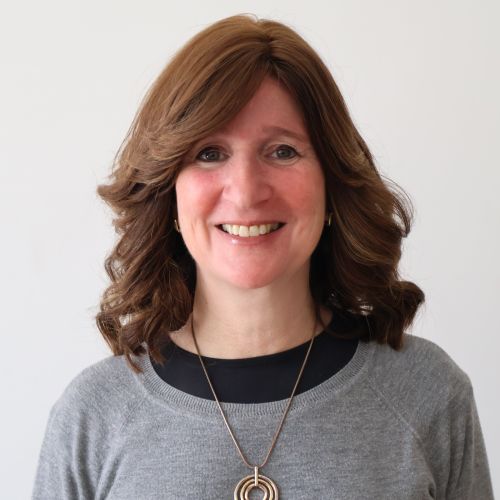
Batya Solomon
Credentials
Finances
- 58 Chai Taib Street
- Jerusalem, 9540560
 Verified
Credentials
Couples and Family Therapist, Psychotherapist
MA
Finances
250-350 NIS
None
N/A
ABOUT THE THERAPIST
When a person comes to me for therapy I am mindful of the fact that s/he will generally know what will be helpful for him/her and try to work together with the client to achieve this goal.
Listening to the client, both to what is overtly said as well as what is implicit in their narrative and/or body language.
Trauma-related issues including the need to establish safety and stabilisation, and find resources that will support the client.
Self-esteem issues, Couples' therapy, Family conflict, Children of divorce, Grief and bereavement
My role as a therapist is first and foremost to provide a safe space for the client. Once established, I try to provide a listening, non-judgmental ear so the client feels secure in sharing his/her issues. I will often reflect back a client's views and feelings, offering them the opportunity to hear themselves. This may serve as a springboard to deeper internal work or alternatively, to a change in direction. I attempt to remember important people and events in the client's life; and will often try to link up things in the present with experiences from the past. Often my role is to offer a different view or interpretation of their life's circumstances and see what new opportunities for growth might arise.
QUALIFICATIONS
MA
University of Haifa
2021
Degree
MAEducation
University of HaifaYear of Graduation
2021Years in Practice
4
ADDITIONAL CREDENTIALS
Certified Trauma Therapist - The Family Institute of Neve Yerushalayim - 2024
DISTANCE COUNSELING
Online Therapy
PRIMARY SPECIALTIES
Anxiety / Panic
Couples / Relationship / Marriage Counseling
Family Issues
Self-Esteem
Trauma / Post Traumatic Stress Disorder PTSD
ADDITIONAL SPECIALTIES
Adjustments
Attention Deficit Hyperactivity Disorder (ADHD)
Autism Spectrum
Behavioral Concerns In Children
Depression
Developmental Disorders
Divorce / Custody
Grief
Learning Disabilities
Life Transitions
Obsessive Compulsive Disorder (OCD)
CLIENT FOCUS
Population
Children
Adolescents
Couples
Families
Women
Languages Spoken
English
Hebrew
Native Language
English
TREATMENT APPROACH
Attachment-Based Family Therapy (ABFT)Attachment-based family therapy (ABFT) is a form of psychotherapy that focuses on the family's relationships and communication patterns. It is based on the theory that strong and secure attachments between family members are essential for emotional health and well-being. The goal of ABFT is to identify any problems in family relationships, enable family members to become more attuned to each other’s needs, and build a secure bond between them. It also helps family members to practice healthy communication skills, learn effective problem-solving strategies, and build trust within the family.
Cognitive Behavioral Therapy (CBT)Cognitive Behavioral Therapy (CBT) is a type of psychotherapy that focuses on how one's thoughts, feelings and behaviors are connected and can be changed. It is based on the idea that how we think (cognition) and how we feel (emotion) can influence how we behave. CBT helps people identify and challenge distorted thinking and replace it with more balanced thinking, leading to improved mood and behavior. ‘Homework’, usually containing practical writing exercises, is often completed by the client between sessions to reinforce the therapy. Examples of tools that practitioners often use are journaling, challenging beliefs, and mindfulness.
Family Systems TherapyFamily Systems Therapy is an approach to psychotherapy that emphasizes the importance of understanding how the family functions as a whole, and how individual family members interact and affect one another. It focuses on how family dynamics, such as communication patterns, roles, and power dynamics, shape behavior, and how changing these dynamics can lead to positive change. Family Systems Therapy is a collaborative approach, where the therapist works with the family as a whole to identify and address areas of conflict and distress.
Imago Relationship Therapy (IRT)IRT focuses on helping couples identify and address their unconscious patterns of behavior that contribute to conflict and dissatisfaction in the relationship. IRT also emphasizes the importance of forgiveness and validation in healing past wounds and creating a more positive and fulfilling relationship. IRT helps couples develop communication skills and a deeper understanding of each other's needs and feelings.
Through Imago Therapy, couples will be able to explore their communication patterns, discover sources of conflict, and create new ways of connecting with each other that build empathy and understanding. The therapist will also work with the couple to create a vision for their relationship and set realistic goals for how to achieve it. This therapy helps couples to develop better communication, trust, and intimacy, as well as providing hope for the future of their relationship.
Narrative TherapyNarrative therapy is a form of psychotherapy that focuses on the stories, or narratives, of a person's life in order to help them gain insights into their situation and develop skills to make positive changes. It is based on the idea that people construct their own stories and meanings to make sense of their lives and experiences. It emphasizes the strengths, values, and skills of the person, while also exploring the influences of culture and context on their life. Narrative therapy seeks to empower individuals by helping them to identify and use their inner resources to overcome challenges and create positive change.
Psychodynamic TherapyPsychodynamic therapy is a form of therapy that focuses on the unconscious mind and how it affects behavior. It works to help people understand and work through past experiences and feelings that may be causing difficulties in the present. This type of therapy encourages individuals to explore their emotions, relationships, and behaviors in order to gain insight into their current difficulties. It can help individuals better understand themselves and their motivations, and gain insight into how past events have impacted their current lives. People tend to develop defense mechanisms when faced with challenges in life. Defense mechanisms may keep painful feelings, memories, and experiences in the unconscious. A few common defense mechanisms include: denial, repression, and rationalization. Psychodynamic therapists encourage people to speak freely about their emotions, desires, and fears. Being open may help uncover vulnerable feelings that have been pushed out of conscious awareness. According to psychodynamic theory, behavior is influenced by unconscious thought. Once painful feelings are brought forth and processed, the defense mechanisms are no longer needed and a person in treatment can start changing unhelpful patterns when coping with life’s challenges.
SERVICES OFFERED
Individual Therapy
Couples Therapy
Family Therapy
Hadrachat Horim