
The Emotion Valve
David’s Dilemma
Sitting across the table from Dan and Dov, his long-time friends, David sighed deeply before responding to their concern. They had noticed that he looked distraught and shared their observations aloud.
“Another relationship fail. How much longer is this going to go on!?”
He sighed again.
“This time it was ‘you don’t share your feelings with me.’ Last time something was missing, I don’t even know what- but clearly there was. And the time before that it was ‘it feels like you’re not really here.’ What does that even mean!?”
“I’m tired of living alone, but it feels like every relationship attempt hits a wall and I don’t know why. It’s not like I’m antisocial or incapable of any sort of relationship. I’m fine with my parents and siblings, I get along with almost everybody, I have friends, a good job…”
His voice trailed off as his words gave way to his frustration.
His friends, who had been nodding in agreement were now sitting in quiet thought. They knew David as intelligent, friendly, savvy, and generous with his time and money. They too were mystified by his predicament.
After a while, Dan mused, “David, I’m as confused as you are by this whole situation and I wish I had an answer. I am wondering though- you went through a lot of hard times as a child, at home and at school. You weathered those times well, but any chance that’s playing a role now?”
Before David could reply, Dov cut in: “That doesn’t sound right to me. Look how well he’s doing in every other part of his life! He’s always managing to get so much done; nothing ever gets him down. He got over his hard times a long time ago!”
Can we make sense of David’s situation? Do his friends' opinions have any merit?
It’s worth asking these questions because David’s predicament is not uncommon; many people struggle to obtain the relationships they seek and they deserve to understand what’s getting in the way, rather than blaming themselves or questioning their self-worth.
Making Sense of the Confusion
Let’s see if we can begin to understand David by using the information already before us. Dan noted that David encountered considerable difficulty in his childhood. This fact matters because the way that David responded to those difficulties can have effects on him even in the present, especially in the manner he relates to other people.
How so?
The difficulties David experienced could have been neglect, abuse, sickness or any number of adverse circumstances or events. Naturally, any of these circumstances can inflict emotional pain on those who experience them. People navigate emotional pain in a variety of ways and one of those ways is to shut out or avoid emotions entirely. Our brains are most likely to employ this tactic when the pain of experience appears or becomes too great to bear.
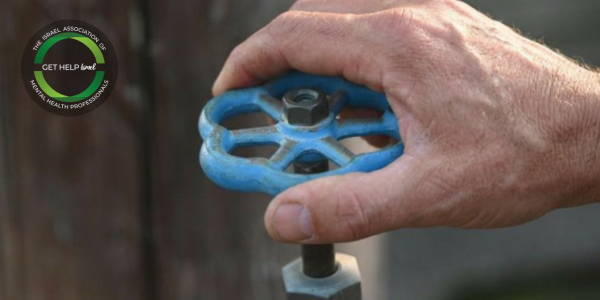
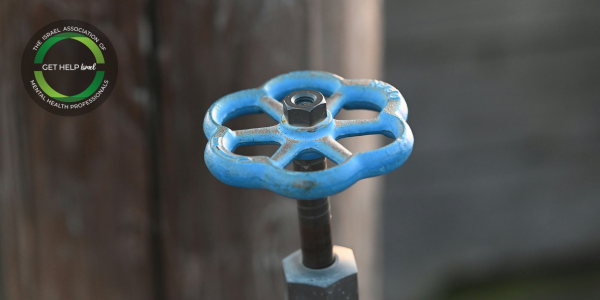
To better understand a common version of this psychological dynamic, it's helpful to imagine a valve through which our emotions flow. Under normal conditions, this valve remains open, allowing free flow to all types of emotions, whether positive or negative. Under abnormal conditions, such as when an overwhelming surge of negative emotions is felt or anticipated, the valve closes, preventing the flow of emotions entirely.
Closing the valve is an extreme measure that our brains need only in extreme circumstances and therefore, generally, adults will need to default to this setting only on rare occasions. But, children, especially those who lack the presence of protecting adults, may find greater need to resort to this “safe mode.” This is because children generally lack skills and resources to manage the emotional fallout of a volatile environment and therefore they will be more likely to make use of this measure.
A person who frequently closes the valve out of habit or keeps it closed over the long-term enjoys the safety of freedom from emotional pain, but pays the price of moving through life, perhaps even accomplishing much, without truly feeling.
When we consider that intimate relationships are rooted in the world of emotions, we begin to understand why someone whose feeling valve is closed will repeatedly encounter relationship disappointment.
And now we begin to understand David. At the same time that he continues to live a productive, value-driven life, he keeps his emotion valve closed. It’s not a conscious decision; rather, his brain abides by the lesson it learned in childhood - that the best way to protect itself from pain is to keep the valve closed. And as long as that valve is closed, an essential pathway for heartfelt relationships is largely out of service, leaving David searching for answers.
Now what?
Now that we’ve offered a theory to explain David’s struggle, are we to conclude that he is destined to remain as he is, emotionally incapable of a close relationship?
The answer is decidedly no. On the contrary: now that David’s past has shed light on his present, he can work toward effecting lasting changes in his relationship patterns. In broad terms, this could involve learning to gradually open the emotion valve and be mindful of when it begins to close.
We’ll elaborate on David’s path forward in a further column. In the meantime, we’ve helped him understand that he defaulted to extreme psychological measures in childhood, which was a necessary and normal response at the time, but are no longer needed given the better options available to him in the present.
As David discovers more about himself, he’ll learn to open his emotion valve with greater ease and experience deeper connection with others.

All articles